
Teak Wood vs Acacia Wood: Choosing the Best for Outdoor Furniture
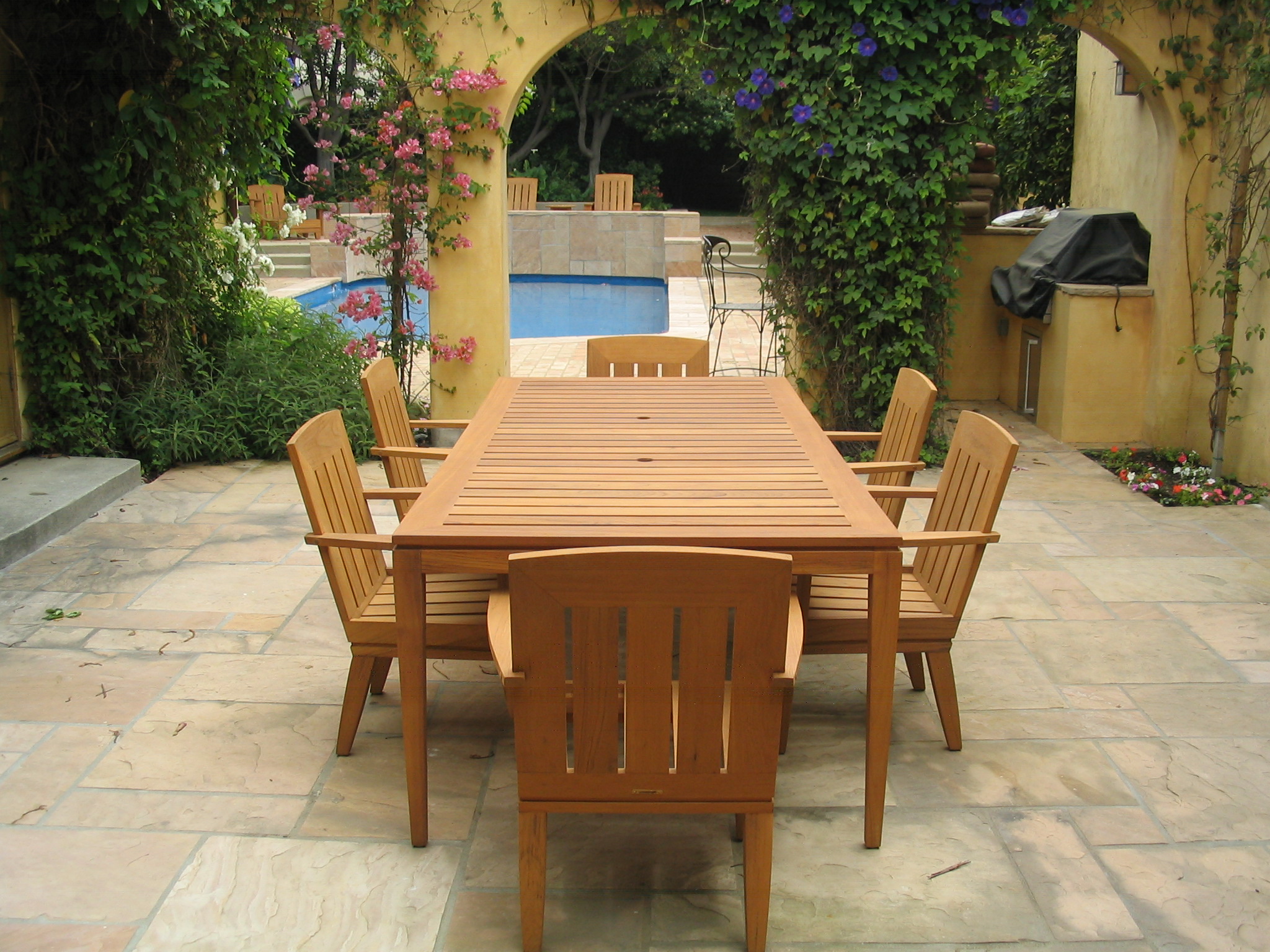
Choosing the best wood for outdoor furniture can mean the difference between enjoying it for decades or dealing with constant repairs. Teak and acacia are two popular options among California homeowners who love their natural look and weather resistance. Teak is renowned for its legendary durability and has been trusted for centuries, while acacia gives you a good-looking option that performs well but won’t break the bank. In this outdoor furniture wood comparison, we’ll explore teak vs. acacia outdoor furniture so you can pick the option best suited to your climate, lifestyle, and budget.
Teak Wood: Characteristics and Benefits
Teak comes from Tectona grandis trees, which are native to South and Southeast Asia and found in countries such as India, Thailand, Indonesia, Malaysia, and Burma. This hardwood ranges in color from light to dark brown and often bears golden honey tones when new. Most teak has a straight grain, though some pieces will feature a wavy or mixed pattern. While raw teak is rough to the touch, it’s relatively easy to work with when building furniture.
Sailors have valued teak’s natural qualities for centuries. With a Janka hardness rating of around 1,070 lbf, teak contains natural oils and silica that resist water, bugs, rot, and mold. These oils act like built-in weatherproofing, while the silica helps to prevent wear, warping, and cracking. That’s why teak furniture can last 50 years or more outside, with pieces staying strong for up to 75 years with proper care.
Teak is a sustainable option, too. Teak trees grow fast — an 8-year-old tree can be used for indoor furniture while an 18- to 20-year-old tree is perfect for outdoor use. Teak also captures a high level of carbon from the air, helping to fight climate change. Most teak comes from tree farms rather than wild forests, offering an environmentally friendly, high-quality option.
Acacia Wood: Characteristics and Benefits
Acacia wood grows in warm climates across America, Africa, Australia, Asia, and the Pacific Islands. With over 1,000 different species, it varies widely in hardness. For example, Australian Blackwood has a Janka hardness rating of 1,160 lbf, while Taiwan Acacia reaches an impressive 3,100 lbf. Other common commercial types include Hawaiian Koa and Asian Walnut.
Acacia ranges in color from amber yellow to deep brown, often with wide grain patterns resembling tiger stripes. The wood varies in texture from medium to rough and is sometimes uneven, so it requires special tools to cut, sand, and finish properly. Despite this, its strength is impressive — some types are 55% harder than European white oak and 90% harder than carbonized bamboo, giving furniture a stability that’s similar to marble.
Acacia costs much less than exotic hardwoods. It grows faster than teak, which helps to keep prices down. When properly kiln-dried, acacia is resistant to warping, shrinking, and cracking and contains natural oils that protect it from weather, termites, and even fire. With proper care, acacia furniture can last decades, but its typical lifespan is 5 to 15 years outdoors, depending on local weather and maintenance.
Acacia Wood vs. Teak Durability and Weather Resistance
Teak is unmatched when it comes to outdoor durability. Its high oil content and tight grain create a natural shield against water, bugs, rot, and mold, while the silica in the wood protects against daily wear and harsh weather. Teak will stay strong for decades, even in places with intense sun, lots of rain, or high humidity, making it a great option for our Southern Californian climate.
Acacia offers good durability, but it lacks the natural oil levels of teak. While acacia is somewhat moisture-resistant, it can’t handle long periods of rain or humidity like teak can. If acacia stays wet for too long, it warps and softens, gradually losing its strength over time. It’s better suited to milder climates and works best for furniture in covered outdoor areas rather than on fully exposed decks.
Teak vs. Acacia Maintenance Needs
Teak needs minimal care, so it’s perfect for busy people wanting beautiful outdoor furniture without any hassle. Its natural weather resistance means basic cleaning just once or twice yearly is often enough. You can use a soft brush, working along the grain, to remove any dirt. You can also cover teak during harsh weather, but the wood handles the elements well on its own. To preserve teak’s golden color, you’ll need to clean and seal it annually, but many owners let the wood age to its natural silver-gray patina.
Acacia needs much more attention to stay looking good. We recommend cleaning it regularly with a soft cloth and warm, soapy water, avoiding silicon or ammonia cleaners, since it stains more easily than teak. You’ll need waterproof covers to protect it from rain since acacia only resists moisture but isn’t waterproof. Also, direct sun exposure will cause fading and cracking, so careful placement matters. The biggest maintenance task with acacia is oiling it every six to 12 months to prevent it from drying out and to maintain weather resistance.
Compared to teak’s basic maintenance routine, acacia requires a lot more care. If you enjoy DIY projects, acacia might work for you, but if you find maintenance a chore, teak’s worth the extra cost.
Choose the Perfect Wood for Your Outdoor Paradise
Ultimately, whether you choose teak or acacia will depend on your specific situation, budget, and the level of maintenance you’re willing to take on. Choose teak if you want durability in harsh weather, minimal maintenance, and furniture that’s a good long-term investment. Pick acacia if you’re more budget-conscious and your outdoor space has weather protection, or you don’t mind regular maintenance. Whether choosing teak’s legendary durability or acacia’s affordable charm, quality wood furniture provides years of enjoyment.