
Best Wood Types for Pool Decks That Resist Moisture and Mold
- Ipe and teak offer the strongest natural resistance to moisture, mold, and long-term poolside wear.
- California sun, salt air, and year-round pool use make wood selection and finishing just as important as installation.
- Routine cleaning, timely sealing, and species-specific maintenance habits can add years to a pool deck’s lifespan.
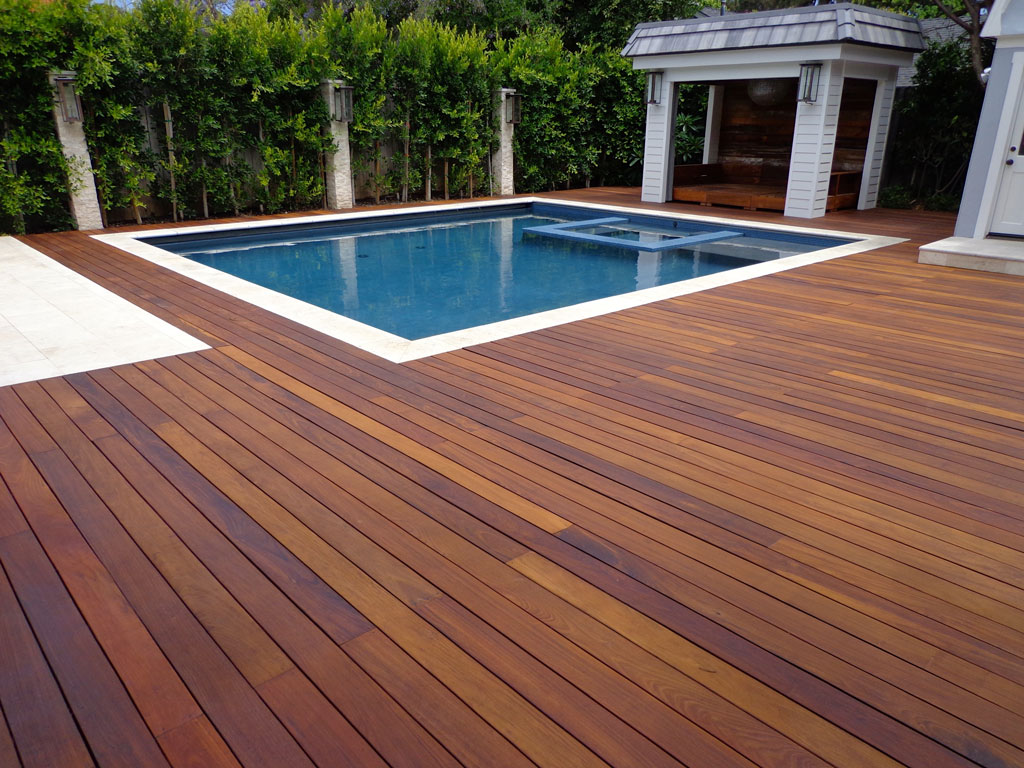
Choosing the right wood for your pool deck determines whether it thrives or deteriorates under constant moisture, chlorinated water, and California sun. After working with countless pool decks throughout Southern California, we’ve seen how the best wood types for pool decks outlast inferior choices by decades. The difference comes down to understanding each species’ natural defenses against moisture and mold.
Your pool deck faces barefoot traffic, water splashing, and temperature swings daily. The wood needs to resist mold, maintain structural integrity when wet, and stay comfortable underfoot during summer heat. Matching your budget and maintenance tolerance to the right wood choice ensures long-term satisfaction.
What Makes Wood Suitable for Pool Decks
Pool decks face unique challenges that separate suitable woods from those destined to fail. Water constantly attacks wood surfaces through splashing, wet feet, and submersion at deck edges. This creates perfect conditions for mold, mildew, and insects unless the wood has natural defenses or chemical protection.
Density directly affects moisture resistance. Tightly packed wood fibers create fewer pathways for water penetration and rot. Natural oils and resins within certain species act as built-in preservatives, resisting fungal growth and insect damage while helping wood shed water. These protective compounds mean less maintenance and better performance in damp pool environments.
Temperature stability matters significantly too. Dark woods can become uncomfortably hot in direct sunlight, while lighter woods stay cooler. The wood’s ability to resist warping and splitting as it expands and contracts determines how well the deck surface stays flat and safe over time.
Best Wood Types for Pool Decks: Species Comparison
|
Wood Type |
Durability in Wet Conditions |
Upkeep Expectations |
Long-Term Appearance |
California Relevance |
|
Extremely high; hardest wood, resists scratching, insects, moisture, and decay due to density |
Very low; minimal maintenance needed |
Premium look retains color with weathering; 40-75 years lifespan |
Trusted for Southern California poolside; handles heat, UV, moisture |
|
|
Superior weather and mold resistance; naturally oily for marine-grade performance |
Low; bug and rot resistant |
Beautiful grain, non-slip surface; 30-40+ years lifespan |
Ideal for luxury coastal pools; high-end resorts |
|
|
Nearly as tough as Ipe; high oil content repels moisture, resists warping |
Low; built for tropical moisture |
Deep golden-brown tone; long-lasting |
Popular in Southern California for pool decks |
|
|
Good natural resistance to decay, rot, insects, and weather |
Moderate; regular sealing recommended |
Warm color, beautiful grain; 15-20 years |
Blends with regional landscapes; lightweight for residential use |
|
|
Superior natural durability against rot and insects; fire-resistant |
Moderate; requires careful sourcing and maintenance |
Iconic regional charm; 15-30+ years |
Native California choice for coastal homes |
|
|
Pressure-Treated Pine |
Good with chemical treatment for rot and insects; handles moisture if maintained |
Higher; diligent upkeep needed |
Functional but fades without care; 15-20 years |
Budget option for entry-level decks |
Ipe (Brazilian Walnut): Premium Durability
Ipe stands as the gold standard for pool deck wood, with hardness rivaling steel and natural moisture resistance outperforming virtually every alternative. This dense South American hardwood contains natural oils that repel water, resist mold, and deter insects without chemical treatment. The tight grain structure prevents moisture from getting inside.
The rich chocolate-brown color deepens over time, developing a silvery patina if left unsealed or maintaining its original hue with proper finishing. Boards typically last 40 to 75 years around pools. The surface stays remarkably cool underfoot compared to composite materials.
Installation requires carbide-tipped tools because of extreme hardness. Pre-drilling every fastener hole takes extra time, but this density creates exceptional dimensional stability. It resists warping, cupping, and splitting even with years of moisture exposure.
Teak: Traditional Marine-Grade Performance
Teak’s reputation in marine applications proves its pool deck performance. This golden-brown hardwood produces natural oils and silica that protect against moisture, decay, and insects. The wood has served on ship decks for centuries because it handles constant water exposure without rotting.
The smooth, tight grain provides excellent slip resistance when wet while remaining comfortable for bare feet. Natural oils keep the wood dimensionally stable, preventing warping and splitting. We work extensively with teak pool decks throughout Southern California, applying specialized finishes through our teak restoration services that enhance natural water resistance while preserving warm appearance.
Teak naturally weathers to attractive silver-gray if left untreated. With regular oiling, it maintains its golden color instead. The wood’s density resists scratching and denting. With proper care, teak decks commonly last 30 to 40 years.
Cumaru (Brazilian Teak): Budget-Friendly Hardwood
Cumaru delivers performance close to Ipe at a lower price point, making it attractive for larger projects. This Brazilian hardwood ranks just below Ipe in density and offers excellent resistance to moisture, decay, and insects. The reddish-brown color brings warmth while natural oils provide built-in protection.
Surface oils help shed water rather than absorbing it. This reduces mold and mildew growth substantially. Cumaru maintains good dimensional stability when properly installed with adequate spacing for expansion.
Working with Cumaru requires similar precautions as Ipe regarding pre-drilling and quality fasteners. Its slightly lower density makes installation somewhat easier though. Expect 20 to 30 years of service life with proper maintenance.
Western Red Cedar: Natural Softwood Option
Western Red Cedar offers natural decay resistance in a lighter, more affordable package. The wood contains natural oils called thujaplicins that repel insects and resist fungal growth. Its distinctive reddish color and pleasant aroma make it popular despite being less dense than tropical hardwoods.
The softer nature works both for and against it. The wood feels pleasant underfoot and stays cooler in direct sun compared to darker hardwoods. However, this softness means the surface dents more easily from dropped objects and heavy furniture, requiring more frequent maintenance.
Regular sealing prevents warping, splitting, and mold growth. The lighter weight and easier workability make Cedar simple to install without special tools. With consistent maintenance, Cedar pool decks last 15 to 20 years.
Redwood: California’s Native Choice
Redwood appeals to California homeowners seeking a locally-sourced option with natural beauty and decent moisture resistance. The heartwood contains tannins that resist decay and insect damage. The distinctive reddish-brown grain patterns create visual interest.
Clear, all-heartwood grades perform best for pool decking, as sapwood lacks protective tannins. The wood’s natural oils help repel water, though not as effectively as tropical hardwoods. Redwood stays comfortable underfoot in warm weather. It also resists warping better than many domestic species.
The wood needs regular sealing to prevent weathering, splitting, and moisture damage. Properly maintained Redwood decks typically last 15 to 30 years around pools.
Pressure-Treated Pine: The Economical Approach
Pressure-Treated Pine offers the most economical entry point. It uses chemical preservatives to make an otherwise vulnerable wood suitable for outdoor use. The treatment process forces preservatives deep into wood fibers, providing resistance to rot, decay, and insect damage.
Modern pressure-treated lumber uses less toxic preservatives than older formulations. The wood accepts stains and sealers well, allowing customization of appearance. The softer texture means easier installation without pre-drilling, reducing labor costs.
The tradeoffs become apparent over time. Low density absorbs water readily despite chemical treatment. This leads to warping, twisting, and splitting. Surface checking and splinters develop more quickly than with hardwoods. Boards typically require replacement within 15 to 20 years.
How Pool Deck Woods Perform in California’s Climate
California’s climate varies from coast to inland valleys, but most regions share intense sun exposure and low humidity that affect wood performance. Coastal areas add salt air that accelerates fastener corrosion and breaks down wood fibers. Inland regions experience wider temperature swings causing expansion and contraction cycles.
Dense tropical hardwoods like Ipe and Teak contain natural UV inhibitors that slow photodegradation. Lighter softwoods fade faster and require more frequent refinishing. Low humidity reduces moisture content that leads to rot and mold, but also causes checking and splitting in woods lacking natural oils.
Southern California’s mild winters eliminate freeze-thaw cycles that plague pool decks in colder climates. This extends the lifespan of all wood types. Year-round pool season means consistent use and wear patterns rather than seasonal extremes.
Maintenance Habits That Extend Pool Deck Life
Routine Cleaning and Inspection Practices
Regular cleaning prevents buildup of organic matter that feeds mold and mildew. Sweep away debris weekly. Periodically wash with mild soap and water to remove body oils, sunscreen, and chlorinated water residue that break down finishes.
Inspect the deck surface every few months for signs of wear, checking, or loose boards. Look for areas where water pools, as standing water accelerates decay. Address drainage problems before they compromise deck structure.
Protective Finishing and Professional Maintenance
Reapply protective finishes before existing coatings fail completely. Hardwoods benefit from oil-based finishes that penetrate and enhance natural water resistance. Softwoods often need film-forming sealers. Refinishing schedules range from annually for softwoods to every two or three years for oiled hardwoods.
Professional maintenance makes sense for premium hardwood decks where wood represents significant investment. Our team specializes in restoring and maintaining exterior wood throughout Southern California through comprehensive deck services. We use premium coatings and proven techniques that maximize deck lifespan by deep cleaning, brightening, and sealing wood to protect against moisture and UV damage.
Choosing the Right Wood for Your Pool Deck
Budget, Maintenance, and Lifestyle Fit
Budget considerations extend beyond initial material costs to include installation complexity and long-term maintenance expenses. Hardwoods cost more upfront but last twice as long as softwoods while requiring less frequent refinishing.
Your maintenance capacity honestly determines which wood type makes sense. If you enjoy weekend projects and have time for annual deck care, Cedar or Redwood provides good value. Those seeking minimal upkeep should invest in Ipe or Teak that performs well with less frequent attention. Pressure-Treated Pine demands the most consistent maintenance to stay functional.
Aesthetics and Performance Requirements
Aesthetic priorities matter for spaces where the pool deck functions as primary outdoor living area. Rich tones of tropical hardwoods create resort-like environments, while lighter Cedar and Redwood offer a more casual feel. Consider how wood color complements your home’s exterior and landscaping.
Performance requirements vary based on pool usage patterns and climate exposure. High-traffic pools with frequent entertaining benefit from extremely durable options like Ipe that resist wear. Less-used pools in partially shaded locations might perform adequately with mid-range options like Cumaru or Redwood.
Contact Teak Master for Expert Pool Deck Finishing
Selecting quality wood represents just the first step toward a beautiful, long-lasting pool deck. Professional installation and finishing determine whether your deck reaches its full potential lifespan.
We bring over two decades of specialized experience working exclusively with exterior wood restoration and maintenance. Our focus on premium hardwoods like Teak, Ipe, and Cumaru means we understand the specific requirements these woods demand. Our multi-step restoration process addresses unique challenges pool decks face, from deep cleaning to applying marine-grade finishes that repel moisture.
Serving Los Angeles, Orange County, Ventura, and throughout Southern California, we offer both on-site service and facility-based restoration. Our licensed, bonded, and insured team handles residential and commercial projects with attention to detail.
Contact us at (888) 639-8424 to discuss your pool deck project. Our expertise helps navigate options between deck material choices, considering your budget, maintenance preferences, and performance requirements. Whether building a new pool deck or restoring an existing one, professional finishing makes the difference between wood that merely survives and wood that thrives for decades in California’s demanding climate.
Frequently Asked Questions
Which wood is best for resisting moisture and mold around a pool?
Ipe and teak are typically the top performers because their dense grain structures and natural oils help repel water, resist fungal growth, and reduce long-term moisture damage. Cumaru also performs well, while cedar and redwood offer solid natural resistance with more regular maintenance.
How long can a wood pool deck last in Southern California?
It depends on the species and upkeep. Ipe can often last 40 to 75 years, teak commonly lasts 30 to 40 years, cumaru about 20 to 30 years, and cedar or redwood around 15 to 30 years with proper maintenance.
How often should a pool deck be cleaned and refinished?
Weekly sweeping and periodic washing help prevent mold and finish breakdown. Refinishing needs vary by species, sun exposure, and moisture conditions, but many softwoods need attention about once a year, while oiled hardwoods may go two to three years between full refinishing cycles.