
Pergola vs Gazebo: Which Outdoor Structure for My Los Angeles Home?
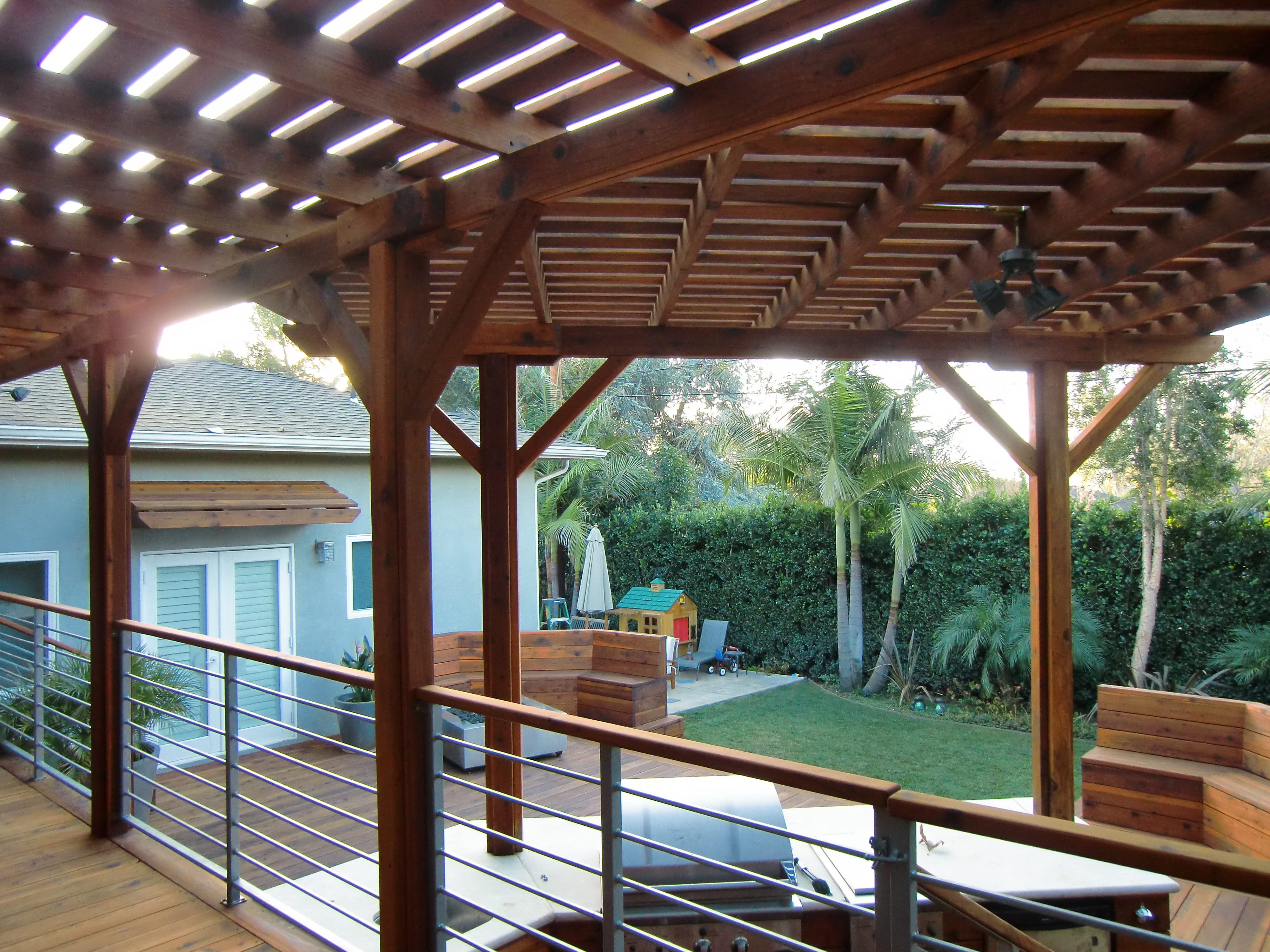
Choosing between a pergola and a gazebo seems simple until you’re actually standing in your backyard trying to picture it. Both structures turn outdoor spaces into places you genuinely want to spend time, but they serve different purposes. Get the choice right and you gain a feature that complements how you live and adds real value to your home. Get it wrong and you’re stuck with something that doesn’t fit your actual habits.
Each structure is worth understanding on its own terms before you compare them. Your specific situation, how you plan to use the space, where it’ll sit, and how much upkeep you’re willing to do, will do most of the deciding for you.
What Is a Pergola?
A pergola is an open-air structure built from vertical posts supporting a slatted or lattice-style overhead framework. That open roof is the defining feature. Sunlight filters through the gaps, producing a dappled, partially shaded environment that feels airy rather than closed in. It’s one of the reasons pergolas have become such a popular addition for patios, garden paths, and outdoor dining areas.
A pergola extends your living space outdoors without cutting it off from the sky. It can be freestanding in the middle of a yard or attached directly to a home’s exterior wall, which makes it a natural covered extension of an indoor room. Many homeowners use pergola-covered spaces for alfresco dining, lounge seating, or as a framework for climbing plants like wisteria or jasmine that build natural shade over time.
Design-wise, pergolas read as modern and clean. Their linear geometry suits contemporary architecture particularly well, though they adapt to almost any home style with the right materials and finishes.
What Is a Gazebo?
A gazebo is a fully enclosed, freestanding outdoor structure, usually built in a polygonal shape with a solid, weatherproof roof. That complete overhead coverage is what fundamentally sets it apart. Rain, intense sun, and light snow cause no real issues under a gazebo roof, which makes gazebos genuinely functional across a wider range of weather conditions.
Historically, gazebos were fixtures of formal garden design, sheltered spaces where people could sit and step away from the main activity of a yard. Today they also function as outdoor entertainment hubs, meditation spaces, or semi-permanent outdoor dining rooms. Many include railings, decorative columns, or partial walls that add privacy and a sense of enclosure.
Compared to pergolas, gazebos carry a more traditional, ornate aesthetic. Their architectural presence is substantial, and they often become the visual centerpiece of a backyard or garden layout.
How Pergolas and Gazebos Really Differ
The difference between a pergola and a gazebo goes deeper than just roofing. Each reflects a distinct approach to outdoor living. The table below captures the key contrasts at a glance.
|
Feature |
Pergola |
Gazebo |
|
Roof Type |
Open lattice/spaced beams |
Solid, shingled, or fully covered |
|
Shape |
Rectangular or square |
Round, octagonal, hexagonal, or square |
|
Shelter Level |
Partial shade, open airflow |
Full overhead coverage |
|
Typical Materials |
Wood (cedar, teak, redwood, pressure-treated pine), aluminum, vinyl |
Wood, aluminum, vinyl |
|
Attachment Options |
Attached to home or freestanding |
Freestanding only |
|
Maintenance Needs |
Regular sealing and refinishing for wood; lower for aluminum/vinyl |
Same as pergola; roof adds complexity |
|
Best Use Case |
Patio extension, dining, pool area, garden path |
Standalone gathering space, rain-exposed yards, garden focal point |
|
Relative Cost |
Lower |
Higher |
Shade and Weather Protection
A pergola’s slatted roof provides partial shade, reducing glare and softening direct sun, but it won’t keep you dry in the rain. A gazebo’s solid roof delivers complete protection from sun and rain, supporting year-round use far better.
For homeowners who want to entertain outdoors regardless of conditions, a gazebo’s all-weather capability is a real advantage. For those who primarily want fair-weather afternoons in a bright, open setting, a pergola’s filtered shade hits the right balance without feeling boxed in.
Shape, Size, and Placement
Gazebos typically come in six, eight, or ten-sided shapes and tend to occupy more square footage than the average pergola. Because gazebos are always freestanding, placement is flexible, but they require an open area in the yard to anchor properly.
Pergolas offer more flexibility in size and positioning. They can attach to existing structures, making them effective in tighter spaces where a freestanding building wouldn’t fit. Homeowners working with compact yards often find the pergola vs gazebo decision comes down to available square footage alone.
Style and Materials
Gazebos carry a formal, garden-party quality that works beautifully in traditional landscaping. Pergolas suit homes with cleaner lines and a more contemporary feel. Material choice shapes both structures significantly. Wood options like cedar, teak, and redwood offer superior aesthetics but require consistent maintenance, especially in coastal and high-UV environments. Aluminum and vinyl reduce upkeep but involve aesthetic trade-offs.
Cost and Long-Term Investment
Pergolas generally cost less to build. Their simpler design requires fewer materials, and installation is typically less labor-intensive. Gazebos involve more material, more structural complexity, and often a longer build timeline, so the upfront costs are noticeably higher. Both structures can contribute positively to resale appeal.
Which Structure Is Right for Your Outdoor Goals?
The right structure depends almost entirely on how you plan to use your outdoor space.
Choose a Pergola If…
- You want a stylish, open-air extension that invites natural light and doesn’t feel enclosed
- You want a defined outdoor dining or lounge area that flows naturally from your interior spaces
- Your yard already has mature trees or natural shade and you want structure without extra overhead coverage
- You’re working with a compact yard where a freestanding building wouldn’t fit
- You want to grow climbing plants as a living canopy over time
Choose a Gazebo If…
- You want a fully sheltered retreat that functions regardless of weather
- You entertain frequently and want to remove the weather variable from outdoor gatherings
- You’re after a traditional garden focal point with real architectural presence
- You want built-in privacy or a space that feels like its own destination
- You need a structure that can genuinely be used through every season
How California’s Climate Affects Your Choice
Southern California’s long, sunny seasons and mild winters mean that heavy rain protection matters less here than in wetter parts of the country. A pergola’s partial shade is genuinely functional for most of the year, providing real relief from the sun without requiring a full roof.
Coastal areas in Los Angeles, Orange County, and Ventura experience morning marine layer, seasonal rain events, and intense UV exposure, all of which stress outdoor structures. Inland areas run hotter and drier, so shade becomes the bigger priority while rain protection is less of a concern. Homeowners closer to the coast may appreciate a gazebo’s additional weather coverage, while those in drier inland areas often find a well-built pergola perfectly suited to their conditions.
California’s UV intensity also affects material selection. Wood structures face significant sun exposure year-round. Without proper protection, surface degradation happens faster than most people expect, so maintenance planning deserves as much thought as the structure itself.
Protecting and Maintaining Your Outdoor Wood Structure Over Time
Whether you choose a pergola or a gazebo, long-term performance comes down to how well the structure is maintained. Wood exposed to sun, moisture, and temperature shifts will naturally weather over time. Without regular care, that weathering moves from cosmetic graying to surface cracking, then to deeper structural deterioration.
A solid maintenance routine starts with periodic deep cleaning to remove dirt, mildew, and surface buildup. Sanding or brightening then restores the wood’s surface and prepares it to absorb a new protective coating. A high-quality sealant or wood oil minimizes UV rays, keeping the wood looking its best.
In Southern California, UV exposure is persistent enough that annual or biannual maintenance cycles are worth planning from the start.
Signs that refinishing or maintenance is needed include fading color, a rough or dry texture, water spotting, a peeling or dull finish, or mildew patches. Hardwoods like teak, cedar, and redwood are popular choices for their natural resistance to rot and insects, but even durable species need consistent professional care to hold up well over time and look their best.
Let Teak Master Help You Get the Most Out of Your Wood Pergola or Gazebo
Once you’ve made your choice, protecting it properly becomes the priority.
Pergola and Gazebo Refinishing Across Southern California
Teak Master has served the Los Angeles area since 1997 and has grown to cover exterior wood care across Southern California. Their restoration work addresses sun damage, fading, dryness, and weather wear on pergolas, gazebos, and other outdoor wood structures throughout the region.
Custom Maintenance Programs for Every Structure
Services are tailored to the specific wood species, structure type, and exposure conditions of each project. Whether your structure is built from teak, cedar, redwood, or ipe, the work is scoped to what the wood actually needs rather than a standard package applied across the board.
To discuss pergola and gazebo refinishing for your home, call (888) 448-8325 or contact us online.